For Notion Template Creators
Docs for Your Templates, Made From Your Templates' Home
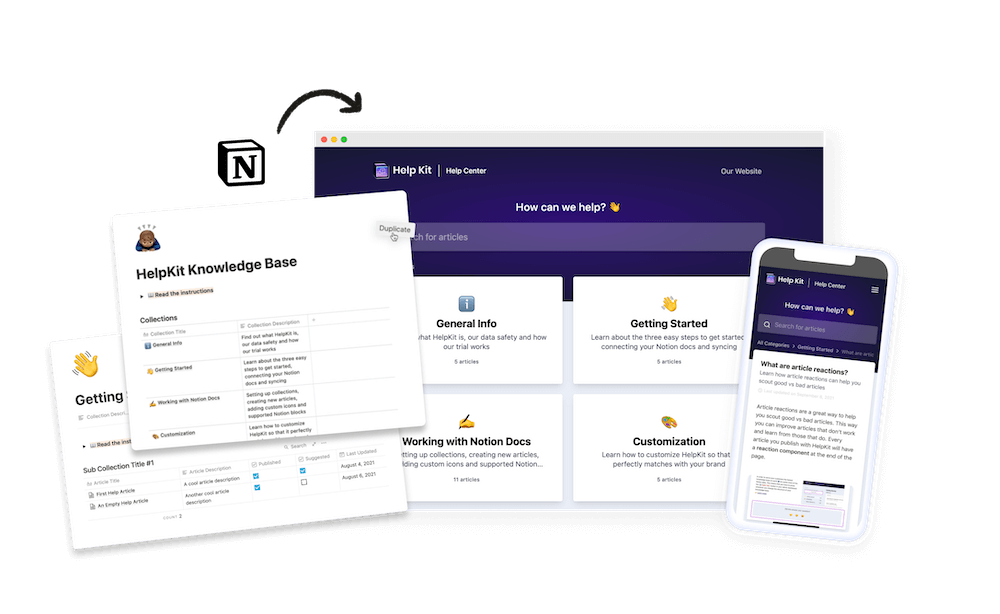
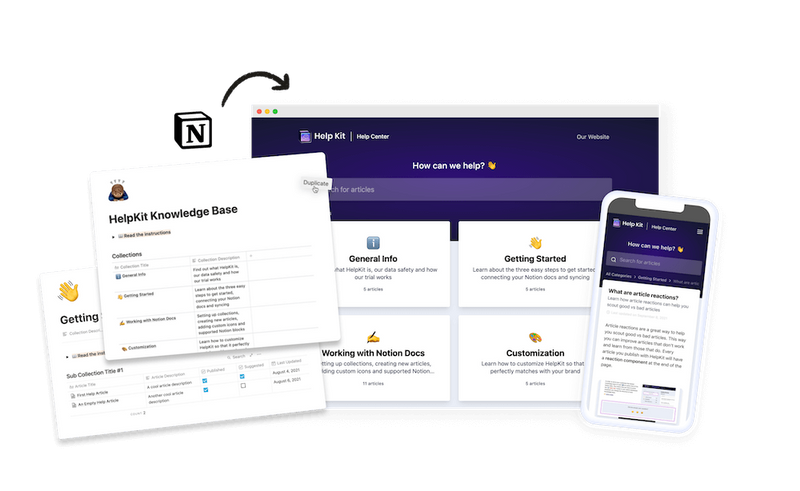
You sell Notion products to Notion people, so your documentation obviously belongs in Notion. HelpKit publishes your setup guides and FAQs as a branded help center your buyers can search, with premium guides gated to customers.
The Best Companies Are Using HelpKit






The same setup DMs after every sale
How do I duplicate it? Why is this view empty? Where do I change the categories? Template support is repetitive, and DMs scale with sales while your time doesn't.
Confused buyers become refunds and bad reviews
A buyer who can't set up your template in ten minutes asks for their money back. A searchable setup guide at the moment of confusion protects both the sale and the rating.
Premium templates deserve premium support
Charging real money for a template means buyers expect real documentation, not a getting-started page inside the template itself.
What you get
Everything included, nothing to build
Searchable setup guides
Duplication steps, customization guides, and troubleshooting per template, organized in categories your buyers can browse and search.
Customer-only documentation
Email-list protection gates advanced guides to buyers: add their email at purchase, and premium docs stay premium.
AI answers in your voice
Buyers ask 'how do I add a new area' and get an answer from your own guides, at any hour, in any timezone your customers buy from.
One hub for your whole catalog
Every template's docs in one branded help center on your domain, growing as your catalog does.
Powered by HelpKit AI
Answers before anyone has to ask you
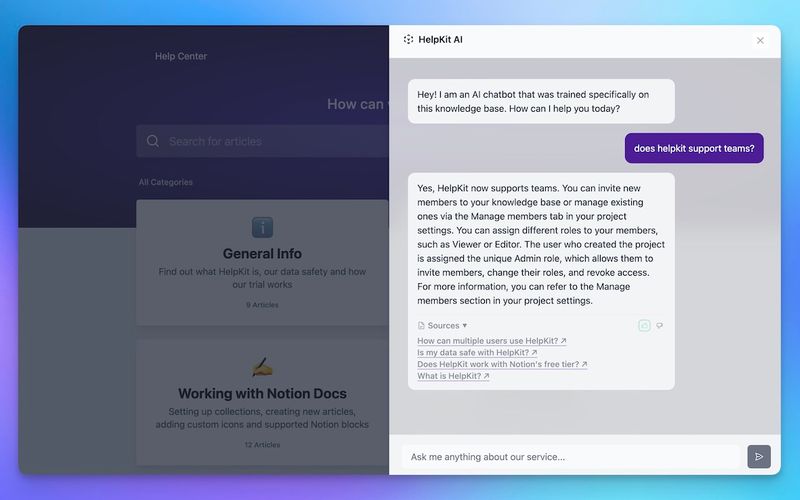
HelpKit AI is trained on your own content. Visitors ask questions in plain language and get an instant answer, with links back to the article it came from.
- ✓Trained automatically on every article you publish
- ✓Answers cite the source article, so nothing is invented
- ✓Works around the clock, in every timezone your users are in
Why your docs belong in Notion
The docs tool your team already knows how to use
Everyone can edit, today. Your team writes in Notion already, so there's no docs platform to learn, no markdown to teach, and no developer bottleneck between "we should update that article" and it being updated.
Docs stay current. Documentation goes stale when updating it is a chore. Editing a Notion page is not a chore, which is why Notion-based docs actually get maintained.
One source of truth. Your knowledge lives in one workspace instead of being copy-pasted into a separate docs system that drifts out of date the same week.
HelpKit adds the pro layer. Notion is the editor; HelpKit is the publishing engine: your domain, search, AI answers, analytics, and access control on top of the pages you already have.
How it works
Your documentation, live in three steps
- 1
Write guides in Notion
You live here already. Setup, customization, and FAQ pages per template.
- 2
Connect HelpKit
Branded help center on your domain, with buyer-only sections if you want them.
- 3
Link from your products
Template welcome pages and purchase emails point to the docs. DMs drop.
Template businesses run their buyer documentation on HelpKit; our case study on the Easlo template business covers what selling Notion products at scale actually involves.
Included on every plan
Everything a professional site needs
Fully branded
Your logo, colours and typography. No HelpKit badge on paid plans.
Your custom domain
Serve on help.yourdomain.com with SSL included, so SEO authority stays yours.
Multilingual
Run several languages from one workspace, without a duplicate system per market.
Instant search
Full-text search that returns answers as visitors type, across every article.
Insights that name gaps
See what people searched for and did not find, so you know which article to write next.
Protected access
Public, password, email allow-list or JWT via your own login. Set it per project.
Embeddable widget
Answers inside your product, without sending anyone out to a browser tab.
AI-readable by default
llms.txt and clean semantic markup, so assistants can quote your docs correctly.
Edits go live instantly
Publish from Notion. No rebuild, no release, no ticket to the web team.


With Helpkit we literally went from 0 to fully functional knowledge-base in 1 hour! The best thing about Helpkit is it allows my non-technical co-founder to do 95% of the work and manage our knowledge-base. We signed up because of how beautiful and well-designed the product is!

Testimonial from Dan Kelly
CEO at Adjust Square
Frequently asked questions
My buyers already use Notion. Why not just put docs inside the template? +
In-template instructions work for the basics, but they can't be searched across templates, can't answer questions in plain language, and clutter the product itself. A dedicated help center keeps templates clean and support scalable, and you still write everything in Notion.
How do I keep paid-template guides away from non-buyers? +
Email-list protection: approve buyer emails at purchase (works with Gumroad, Lemon Squeezy, or any checkout that gives you the email) and the protected docs open only for them.
Does this work for free templates too? +
Yes, and public docs for free templates do double duty as marketing: they rank for setup questions, showcase your care level, and warm up buyers for paid products.
What should template docs cover first? +
Duplication and first-run setup, the customizations buyers most often want, and the three questions your DMs repeat. Ten focused articles absorb most of the volume.
 Ready to turn your
 Notion pages into a
professional
Join 1000+ happy customers reducing their support ticket load and getting customers to their answers quickly.